Direct Mail Newsletters: A Proven Strategy for Customer Engagement
Direct Mail Newsletters: Why Businesses Are Returning to Print for Customer Engagement
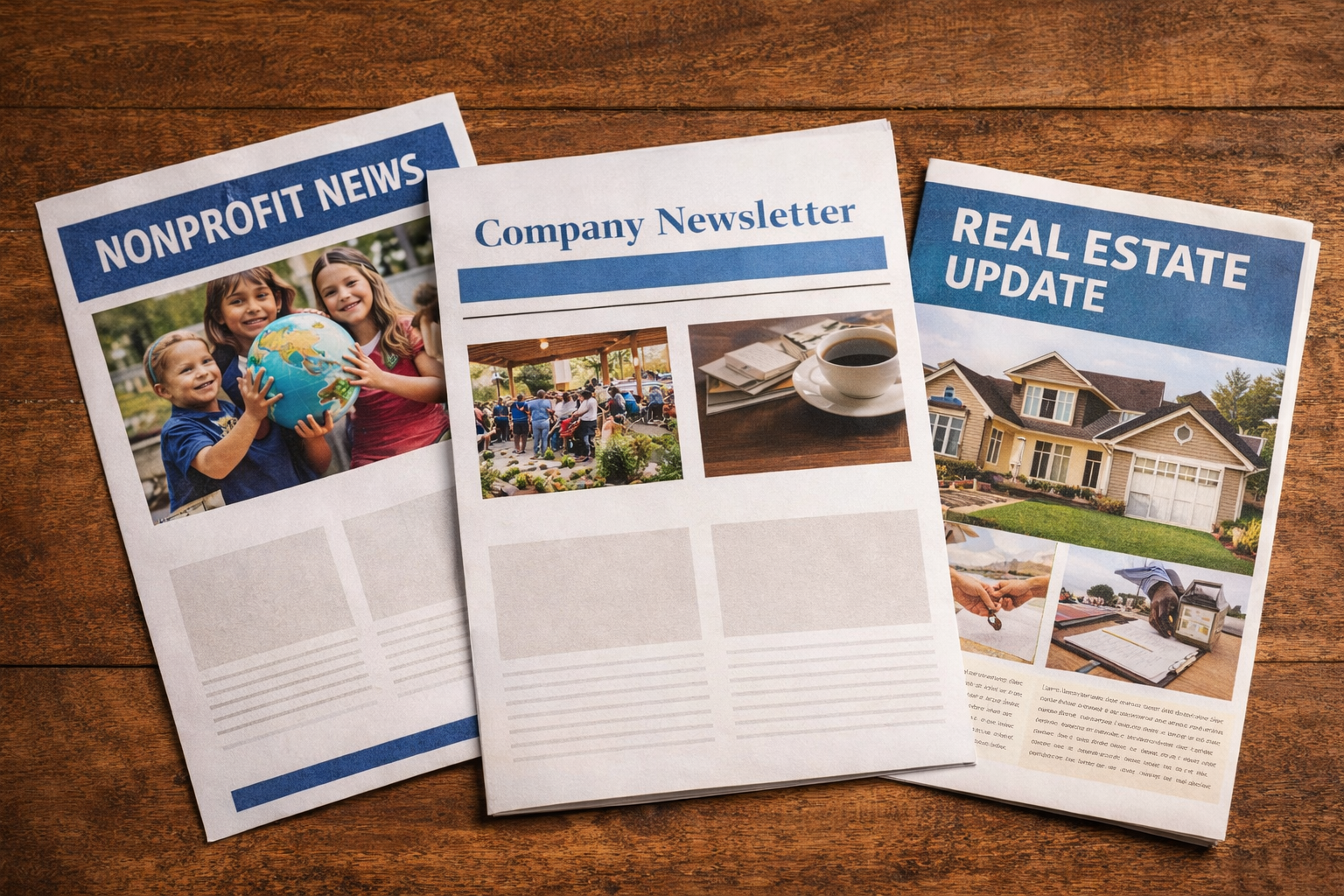
A direct mail newsletter is a printed publication sent through postal mail to a mailing list of clients, supporters or stakeholders. It delivers news, updates, stories and information in a tangible, physical format instead of relying on digital channels. For nonprofits, schools, real estate agencies or service providers, a mail newsletter offers a reliable way to reach audiences who value or expect printed communication.
Even in a digital focused world, direct mail newsletters remain important. Inboxes are overcrowded, digital messages are often ignored and emails are easily deleted. A printed newsletter stands out because it arrives physically and cannot be filtered away by spam systems or hidden by algorithms. This physical presence helps your message rise above the digital noise.
For many audiences, including older supporters or community members, a mailed newsletter feels more personal and genuine. It provides authenticity, trust and a level of permanence that digital messages often lack. This is why print newsletters are still relevant and effective as part of a long term communication strategy.
The Power of Tangibility in Customer Engagement
Physical Retention and Longer Attention Span
One of the strongest benefits of a print newsletter is its tangibility. A mailed newsletter can sit on a table, be saved, shared or re read. It does not vanish the way a digital message does. This physical presence increases the chance that the content will be noticed and remembered.
The act of opening and reading printed material feels more intentional. People associate mail with important information and tend to slow down and read more carefully. This longer attention span leads to deeper engagement with your message.
For nonprofits, schools, real estate agents and service providers, this results in better communication, higher visibility and stronger overall connection with the audience.
How Print Builds Trust with Diverse Audiences
Not all audiences prefer digital communication. Some clients or supporters trust physical mail more. For nonprofits and schools, print newsletters can reach parents, donors, alumni and older community members who appreciate printed information. For real estate or service providers, print newsletters can reach long term clients or local neighborhoods with a stronger sense of credibility.
A high quality printed newsletter from iti Direct Mail shows that your organization values professionalism and thoughtful communication. This builds trust, which is a key factor in customer retention, donor loyalty and long term client relationships.
Customer Retention Through Consistent Print Newsletters
Building Long Term Loyalty with Recurring Mail Newsletter Campaigns
Consistency helps build loyalty. Sending a direct mail newsletter on a regular schedule keeps your organization visible and top of mind. Over time, recipients come to expect these mailings and appreciate the updates.
For nonprofits, this can lead to stronger donor retention. For schools, it helps maintain connections with parents and alumni. Real estate agencies can stay relevant to past clients. Service providers can remind customers of seasonal updates or maintenance schedules. Consistent communication strengthens relationships and boosts long term retention.
Why Direct Mail Newsletters Increase Repeat Engagement
A well presented printed newsletter encourages engagement. It offers value through useful content, news or updates, rather than only promotions. Over time, this builds goodwill and trust.
Recipients often feel that printed newsletters are more personal and thoughtful than mass email blasts. As a result, they are more likely to act, attend events, donate, contact you, or keep your organization in mind for future needs. This leads to repeat engagement and deeper relationships
Design Best Practices for High Response Newsletters
Layout Essentials Using 11x17 Newsletter Printing
A clear and spacious layout makes a big difference. An 11x17 newsletter format offers generous room for articles, photos, white space and easy to read formatting. The right layout increases readability and directs the reader through the content naturally.
The key is balance. Avoid clutter. Use clear headings, readable fonts and organized sections that make the newsletter inviting and easy to navigate. With enough space, you can share a mix of stories, updates, images and calls to action without overwhelming the reader.
Color, Typography and Readability Guidelines
Choose clean and consistent typography. Select colors that match your brand but still keep readability high. Avoid backgrounds that make text hard to read.
Whitespace improves readability and creates a modern, organized look. Well designed newsletters help communicate professionalism and maintain trust, which is essential for nonprofits, schools, real estate firms and service businesses.
Storytelling Strategies That Strengthen Customer Connections
How Narrative Driven Content Increases Emotional Engagement
A newsletter is more than information. It is a way to tell stories. Narrative content creates emotional connection and makes your audience care.
For nonprofits, stories about community impact or volunteer efforts resonate deeply. Schools can share student achievements or upcoming events. Real estate professionals can offer neighborhood news or home tips. Service providers can share insights, advice or updates.
These stories build connection, create interest and establish a sense of belonging.
Using Updates, Success Stories and Community Highlights Effectively
Mix different types of content to keep the newsletter engaging. Include updates, highlights, helpful tips and community news. This variety ensures that different readers find value in each issue.
Use photos, quotes and graphics to make the content more visual and easier to read. Personal touches like member or client spotlights can also help build stronger connections.
Newsletter Mailing Services and Fulfillment Options
What Businesses Should Expect from Newsletter Mailing Services
When printing and mailing a direct mail newsletter, you need a reliable partner who can handle every step, including printing, addressing, mail merging, folding and mailing. iti Direct Mail provides these services so you can manage your project without having to coordinate multiple vendors.
A good mailing service should offer flexibility for both small and large mailing lists. It should support personalization through variable data printing, allowing you to tailor parts of the newsletter for individual recipients.
Addressing, Folding, Inserting and Delivery Best Practices
A professional mailing service should handle all logistics. This includes folding the newsletter, preparing it for mail delivery, applying postage and ensuring accurate addressing. Personalized addressing improves the professional appearance and increases the chance that the newsletter will be opened and read.
Accurate data, clean mailing lists and reliable delivery processes all contribute to successful newsletter campaigns.
Why Direct Mail Newsletters Are More Effective Than Digital Only Updates
Avoiding Inbox Overload and Digital Fatigue
People are overwhelmed with digital messages. Email inboxes are full of alerts, promotions and social updates. Many emails never get opened.
A printed newsletter avoids this problem entirely. It arrives in the mailbox, stands out as something tangible and gets noticed. It cannot be lost in an inbox or filtered out.
Higher Credibility and Perceived Value in Print Communication
Printed newsletters have a sense of value that digital messages often lack. They feel more serious and more authentic.
For nonprofits reporting to donors, schools updating families or real estate firms reaching out to clients, this credibility is important. Print communication shows that you care enough to invest in high quality communication.
How to Integrate Print Newsletters Into a Multi-Channel Strategy
Pairing Direct Mail Newsletters with Email and Social Media
Print newsletters do not need to replace digital communication. Instead, they should complement it. You can send a printed newsletter to capture attention and follow up with email recaps, social media highlights or additional resources on your website.
This blended approach maximizes engagement and reaches people across platforms.
Tracking Engagement and Retention Metrics
Print newsletters can still be measured. You can track responses, donations, calls, website visits or customer actions following newsletter delivery.
By monitoring patterns, you can identify what content works and optimize future mailings.
Conclusion
In a world filled with digital noise, printed newsletters offer a powerful and personal way to engage your audience. They provide credibility, trust and a longer lasting impression than most digital messages can achieve. For nonprofits, schools, real estate agencies and service providers, direct mail newsletters can strengthen relationships, build loyalty and improve communication.
If you want to elevate your engagement and retention efforts, it may be time to bring print newsletters back into your strategy. Use the form to share your project details and request a quote today.
Frequently Asked Questions
What is a direct mail newsletter?
A direct mail newsletter is a printed publication that contains updates, stories and information for a specific audience and is delivered through postal mail.
Why choose print newsletters instead of email?
Printed newsletters stand out, avoid digital clutter and often feel more personal and credible.
Can newsletters be personalized?
Yes. With mail merged printing and variable data, newsletters can be customized for each recipient.
How often should I mail newsletters?
Quarterly, biannual or monthly schedules can work well. The most important factor is consistency.
Which organizations benefit from print newsletters?
Nonprofits, schools, real estate firms and service providers benefit because they rely on long term relationships and trust.
What should I expect from a mailing service?
A full service provider should handle printing, addressing, folding, postage and mailing so your project is simple and professional.
Published on December 22, 2025.


